
Discoid eczema
What is discoid eczema?
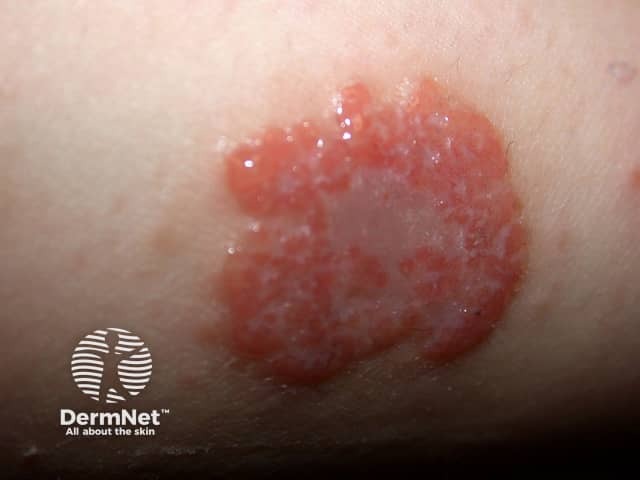
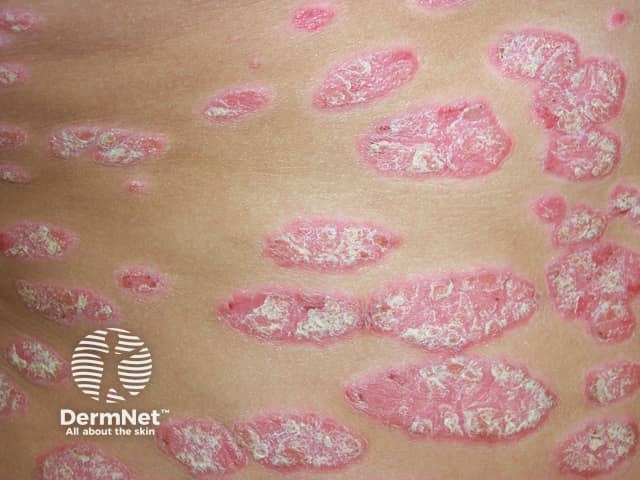
Discoid eczema is a common type of eczema/dermatitis defined by scattered, well-defined, coin-shaped and coin-sized plaques of eczema. Discoid eczema is also called nummular dermatitis.

What is the cause of discoid eczema?
The cause of discoid eczema is unknown. Some cases are associated with Staphylococcus aureus infection.
The eruption can be precipitated by:
- A localised injury such as scratch, insect bite or thermal burn
- Impetigo or wound infection
- Contact dermatitis
- Dry skin
- Varicose veins (varicose eczema).
Who gets discoid eczema?
Discoid eczema can affect all age groups. It is slightly more common in older adult males and younger adult females. In males there is an association with chronic alcoholism. Drug-induced discoid eczema can be due to medications that cause skin dryness.
What are the clinical features of discoid eczema?
Discoid eczema usually affects the limbs, particularly the legs, but the rash may be widespread. Although often bilateral, the distribution can be asymmetrical especially if related to varicose veins.
There are two clinical forms of discoid eczema:
- Exudative acute discoid eczema: oozy papules, blisters, and plaques
- Dry discoid eczema: subacute or chronic erythematous, dry plaques
Individual plaques are well-circumscribed, mostly 1–3 cm in diameter, and inflamed. The majority of patches are round or oval. The plaques are usually very itchy. The skin between the patches is usually dry and irritable.
Severe discoid eczema may generalise, with numerous small to large itchy plaques appearing all over the body due to an autoeczematisation reaction.
Patches may clear up without leaving a sign. In dark skin, marks may persist for months as dark brown postinflammatory hyperpigmentation or pale postinflammatory hypopigmentation.
Read more about discoid eczema.



Post your comment
Comments
27 August 26
Eric
Thank you, very informative
19 August 26
Mohammad Zaher
Thank you, very useful and informative, and helps to remember most common skin conditions
7 July 26
Mary Angeleen
Wonderful, Very useful and thank you.
2 July 26
Dr Tanmoy Maitra
Very useful
2 July 26
David
I have seen it several times in association with RA. Coincidence?
1 July 26
Barry
These are excellent. Thank you very much.
1 July 26
Mohammad Zaher
Can you give the treatment options as well.
1 July 26
DermNet
Thank you for your question.
Please click on the link above "Read more on Discoid eczema" for our full page that includes treatment options.
No one has commented on this page yet.