
What is psoriasis?
Psoriasis is a chronic inflammatory skin condition characterised by clearly defined, red and scaly plaques. It is classified into several types.
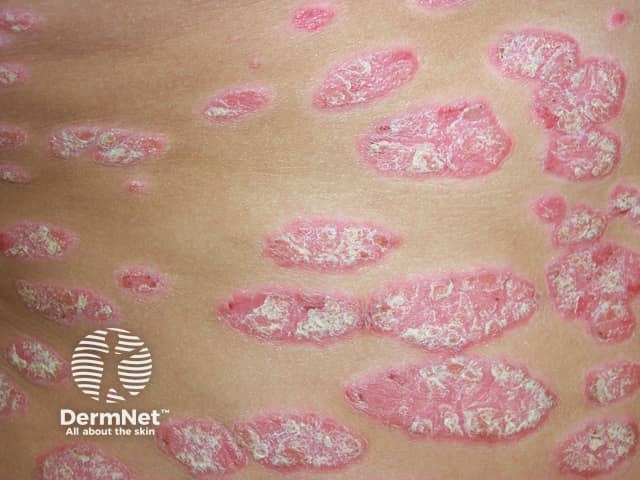
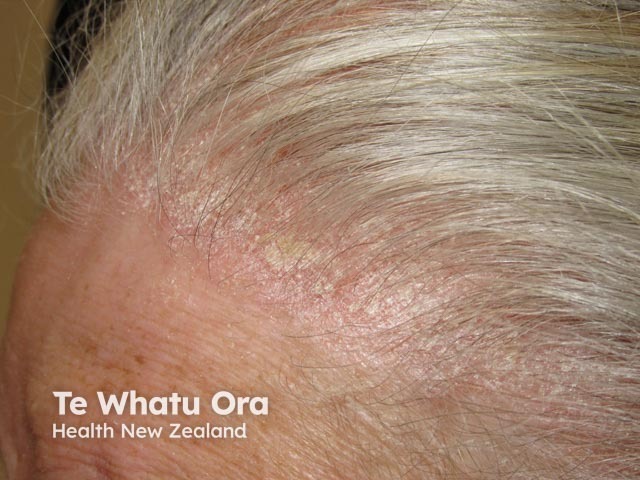
What are the clinical features of psoriasis?
Psoriasis usually presents with symmetrically distributed, red, scaly plaques with well-defined edges. The scale is typically silvery white, except in skin folds where the plaques often appear shiny with a moist peeling surface. The most common sites are the scalp, elbows, and knees, but any part of the skin can be involved. The plaques are usually very persistent without treatment.
Itch is mostly mild but may be severe in some patients. Itch leads to scratching and lichenification characterised by thickened leathery skin and increased skin markings. Painful skin cracks or fissures may occur, particularly on the palms and soles.
Psoriasis can demonstrate the Koebner phenomenon. This involves the generation of new psoriatic lesions on the skin that has previously been damaged or irritated (injury, burns etc.)
When psoriatic plaques clear up, they may leave brown or pale marks (postinflammatory hypo- or hyperpigmentation) that can be expected to fade over several months.
How is psoriasis classified?
Certain features of psoriasis can help guide appropriate investigations and treatment pathways - overlap may occur.
These include:
-
Early age of onset <35 years (75%) vs late age of onset >50 years
-
Acute eg guttate psoriasis vs chronic plaque psoriasis
-
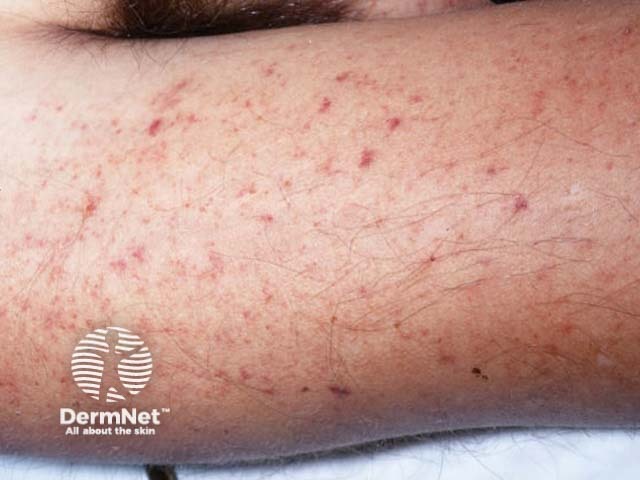
Localised eg, scalp, palmoplantar psoriasis vs generalised psoriasis
-
Small plaques (<3 cm) vs large plaques (>3 cm)
-
Thin plaques vs thick plaques
-
Nail involvement vs no nail involvement




Post your comment
Comments
16 August 26
Moti
Good but I expected more about treatment specifically some practical hints.
16 August 26
DermNet
Thank you for your comment. Our information on psoriasis treatment is found on the linked psoriasis page.
14 August 26
Altaaf
Excellent article
13 August 26
Elham Mutahar
Thank you for this information!
13 August 26
Abbas
Excellent
13 August 26
Ghazala
Please also comment on vulval psoriasis signs/symptoms .
16 August 26
DermNet
Thank you for your comment. This article aims to raise awareness of the general condition - we have an extensive number of related pages. Please refer to our DermNet page on genital psoriasis.
13 August 26
Abdul wakeel
Very good
12 August 26
Khiredine
As psoriasis is a chronic inflammatory skin condition, is it a cardiac risk factor
12 August 26
Abba
nice one
12 August 26
mohamed Elamin
Excellent....very nice topic
No one has commented on this page yet.