
Dermatological Emergency: Meningococcal Disease
Meningococcal disease is an illness caused by the bacteria Neisseria meningitidis. The two common presentations of meningococcal infection are meningococcal meningitis (infection of the membranes that surround the brain and spinal cord) and meningococcemia (infection of the bloodstream). An infected individual may suffer one or both of these diseases.
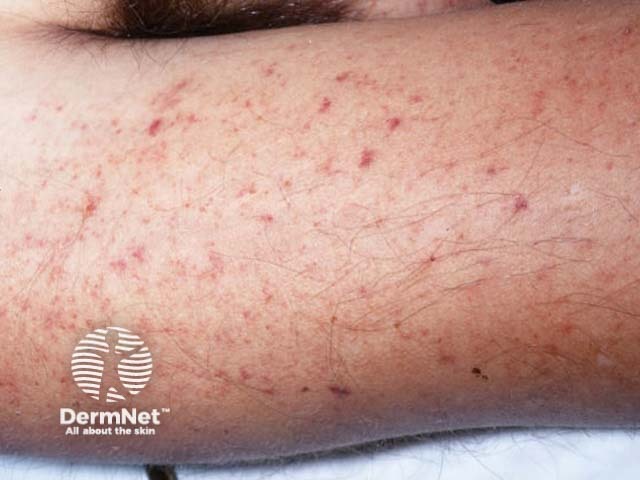
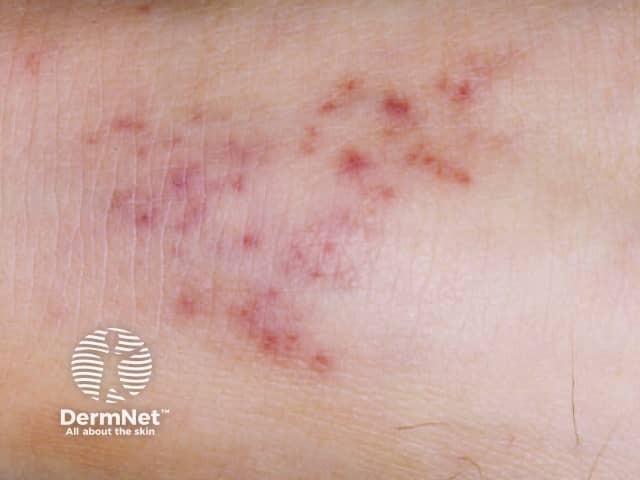
It should be considered when there is:
-
Neck stiffness
-
Headache
-
Nausea and vomiting
-
Neck and/or back pain
-
Fever and chills
-
Increased sensitivity to light
-
Irritability or confusion
-
Petechiae (rash of small red or purple spots [purpura] that do not disappear when pressure is applied to the skin)
-
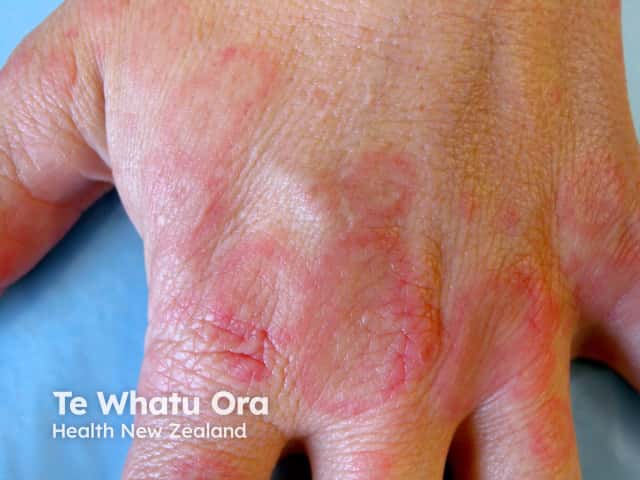
A blanching or maculopapular rash
-
A rash that progresses to larger red patches or purple lesions (similar to bruises)
-
Rapid clinical deterioration.
Infants may present differently with symptoms such as refusing feeds, increased irritability, excessive sleepiness, fever, a bulging fontanelle (soft spot on the head), inconsolable crying, or seizures.
Key Points:
-
Petechiae occur in 50–75% of cases of meningococcaemia.
-
The rash is most often found on the trunk and extremities but may progress to involve any part of the body.
-
Not all patients have skin signs.
-
Patients may initially just have a rash and not be particularly unwell.
-
Early recognition of meningococcal infection is critical as meningococcemia spreads so quickly that within hours of symptoms appearing, a patient may rapidly die.
-
Patients with either meningococcemia or meningococcal meningitis must be hospitalised and treated with antibiotics and supportive care immediately.
Why it matters:
Meningococcal disease is a medical emergency and patients showing signs and symptoms suspicious of meningococcal infection need to seek medical advice from their doctor or a hospital immediately. A delay of even hours can be fatal.




Post your comment
Comments
16 September 26
Mohammed Jasimuddin
Highly informative and interested
16 September 26
Mohammed Jasimuddin
Very informative in brief and precise analysis of the subject.
15 September 26
Elham Mutahar
It was informative Thank you!
11 September 26
Ben
Thanks
10 September 26
Richard
Goooooood 60 sec Derm review, keep them comming.
10 September 26
ALBERT
Two points:
1. Don't wait for the systemic signs to appear; get in and treat early
2. One important clue is the asymmetry of the rash
10 September 26
Anonymous
What about fungal meningitis? Would there be any signs shown on the skin?
10 September 26
Barry
A timely review.
10 September 26
Angie
The tricky part of Meningococcal disease is that it can easily be mistaken for many other medical issues. Seven of symptoms (neck pain, light sensitivity, headache etc) often go with something as common place as migraines.
The biggest problem is how quickly Meningococcal can kill a person and how easy it would be to misdiagnose it.
9 September 26
Nina
Interesting to read that Patients may initially just have a rash and not be particularly unwell. I had thought that by the time the rash is evident pts are quite unwell with Sx of sepsis
No one has commented on this page yet.